
Dental implants are a popular and effective solution for replacing missing teeth, providing a long-lasting and natural-looking alternative to dentures and bridges. If you’re considering dental implants for a full set of teeth, you might wonder how many implants are necessary. The answer depends on several factors, including the condition of your jawbone, the type of restoration, and your overall dental health. Let’s explore the details.
Understanding Dental Implants
Dental implants are titanium posts surgically placed into the jawbone to serve as artificial tooth roots. They provide a sturdy foundation for fixed or removable replacement teeth that match your natural teeth. Implants can replace a single tooth, several teeth, or an entire arch of teeth.
Full Set of Teeth: What Does It Mean?
A full set of teeth typically refers to the complete upper or lower arch, consisting of 14 to 16 teeth, depending on whether the wisdom teeth are included. When considering dental implants for a full set, it’s important to note that not every missing tooth requires an individual implant. Instead, the strategic placement of fewer implants can support a full arch of replacement teeth.
How Many Implants Are Needed?
1. Full Arch with Individual Implants
In some cases, replacing each missing tooth with an individual implant might be necessary. This approach, however, is less common and more invasive. For a full upper or lower arch, this would mean 14 to 16 implants, which is generally not practical due to cost and surgical complexity.
2. Implant-Supported Dentures
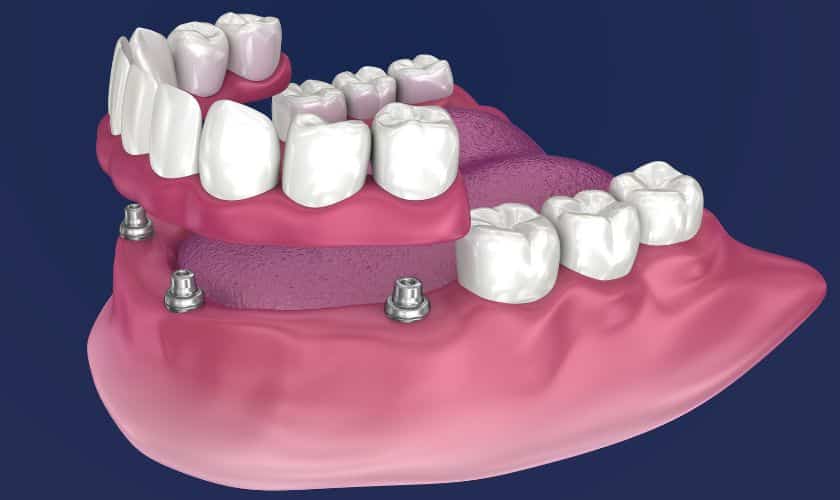
A more common and practical approach is using implant-supported dentures or bridges. This method requires fewer implants to support a full arch of teeth. Typically, 4 to 8 implants are sufficient for this purpose:
- All-on-4: This method involves placing four implants in the jaw to support a full arch of teeth. It’s a cost-effective and less invasive option, offering stability and functionality.
- All-on-6: In some cases, six implants are used to provide additional support, particularly for patients with lower jawbone density.
- All-on-8: Eight implants can offer even more stability and are sometimes recommended for the upper arch due to its softer bone structure.
3. Factors Influencing the Number of Implants
The exact number of implants needed can vary based on several factors:
- Jawbone Density: Patients with sufficient jawbone density might need fewer implants. Those with bone loss may require bone grafting and more implants for adequate support.
- Oral Health: Overall oral health, including gum health and the presence of any infections, can influence the implant placement and number.
- Implant Location: Implants in the front of the mouth typically need less support than those in the back, as the front experiences less chewing pressure.
Benefits of Implant-Supported Full Arch Restorations
1. Stability and Functionality
Implant-supported dentures and bridges offer superior stability and functionality compared to traditional dentures. They allow for normal eating, speaking, and smiling without fear of slippage.
2. Bone Preservation
Dental implants stimulate the jawbone, preventing bone loss that commonly occurs with missing teeth. This helps maintain facial structure and overall oral health.
3. Natural Appearance
Implant-supported restorations look and feel like natural teeth, providing a more aesthetically pleasing result.
For those considering dental implants in Chandler, it’s essential to consult with a skilled and experienced implant dentist. They can assess your specific situation, recommend the best treatment plan, and determine the appropriate number of implants needed for a full set of teeth. Local dental professionals in Chandler are equipped with the latest technology and techniques to ensure successful and satisfying results.
The number of dental implants needed for a full set of teeth can vary, but strategic placement of 4 to 8 implants is often sufficient for a full arch restoration. Consulting with a good dentist will help you determine the best approach for your individual needs, ensuring a healthy, functional, and beautiful smile.